

The motivations of the acquittal as set forth in the 1800 pages from the First Criminal Chamber of the Court of Rome: “There is no proof of any concrete involvement in or awareness of the offences”. Indeed, the sentence states, “It has not been proved nor is it provable that he had any knowledge of the formidable probative evidence established by the results of the complex letters rogatory”.
Please download here the complete sentence
 Posted in
“Scaglia is innocent, not involved in VAT fraud” | Judges grant the entrepreneur full acquittal
The court acknowledges that the founder of Fastweb did not commit crimes. The sentence comes after 147 hearings in three years – the company director, held under arrest for a year, had returned to Italy to cooperate with the judiciary
On October 17 2013, the Court of Rome fully acquitted Silvio Scaglia of the accusation of criminal association with intent to evade tax. The judges established that “there is no proof of his involvement in the illicit activity” conducted by a criminal organization. Along with Scaglia, the Fastweb and Telecom Italia Sparkle managers involved in the investigation were also acquitted.
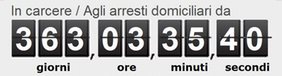
Mr. Scaglia, who was abroad when he heard the news of his arrest warrant on February 23 2010, promptly returned to Italy in order to place himself at the disposal of the judiciary. For 90 days he was incarcerated in the prisons of Rome, before being placed under house arrest, which was applied in an extremely severe form for three months. The trial, after 147 hearings in 35 months (from November 23 2010 to October 17 2013), during which hundreds of witnesses testified, confirmed that Mr. Scaglia had absolutely no involvement with the VAT evasion carried out by a criminal organization which had exploited Fastweb, a victim of the fraudulent scheme.
The sentence states that the illegal mechanism set up by the criminal organization was conducted through “two distinct, consecutive fraudulent commercial operations [named “operazione Phuncard” and “Traffico Telefonico”, ed.] through which the association made illegal profits totalling 360 million euros in VAT which was not paid to the State. This amount was then “laundered” through the interposition of numerous Italian and foreign companies, in order to impede the identification of its criminal origin”.
The prosecution argued that behind the operation was “a criminal alliance between corporate managers and large criminal groups, which made it possible to carry out one of the largest VAT frauds”. In short, in both the “Phuncard” and the “Traffico Telefonico” cases, the criminals stand accused of having used the funds of Fastweb (and of Telecom Italia Sparkle) in order to “have the liquidity necessary to achieve the ‘carousel’ and for their part, various managers are thought to have exploited the fictitious transactions to reach targets for turnover, profits and margin for the purposes of what is known as embellishment of financial statements”.
The 1800-page sentence, in which those responsible for the fraud are punished, rejects this theory in full.
Indeed, the Bench expressed a “clear judgment on the complete non-involvement of the accused, Silvio Scaglia, in the matter”. “It has not been proved nor is it provable”, the sentence states, “that he had any knowledge of the formidable probative evidence established by the results of the complex letters rogatory”.
Hence the “rightful acquittal of the defendant under count 2 of the indictment [untruthful declaration through the use of invoices or other documents for inexistent transactions, Ed.], because the fact does not amount to a criminal offence”.
Moreover, the sentence acknowledges that the companies did not possess the tools necessary for exposing the fraud, which was carried out through “fictitious contractual relationships between shell companies artfully set up in order to justify the various transfers of capital”. In order to get to the bottom of the complex financial flows, the investigators had to resort to investigations made possible by “complex, elaborate letters rogatory, which were clearly beyond the reach of the company managers”.
Lastly, the sentence disputes the theory whereby Silvio Scaglia, due to his position as the overall head of the company, could not have not known. On the contrary, having commended the auditing activities carried out within the company and cited inspections and consulting which underlined “the absolute irrelevance of the non-core activities from the perspective of the investors and, in general, the financial markets”, the sentence notes that Scaglia’s participation in the life of Fastweb “during the course of the phone traffic operation had been minimal, a fact which is proven by the lack of any form of contribution (e-mail, correspondence including by phone) to the executive aspects of the matter”.
Besides, at the time Silvio Scaglia was already moving on: “his approach and personal and professional inclination – he himself stated before the Court – had always been that of creating companies, managing a Start-up until it had reached a level of maturity and stability that would allow him to change his target. This had happened previously at Omnitel, and it occurred in the same way with FastWeb, given that in 2005, having realised that the company had reached a level of maturity that would allow a new change of direction, he had come to the decision to cultivate new entrepreneurial projects”.
As he in fact did, once the burden of an unjust accusation had been removed.
Italian Judge Approves Release of Fastweb Founder Scaglia
As reported by The Wall Street Journal:
MILAN (Dow Jones)–A Rome-based judge has signed off on the release of Fastweb SpA (FWB.MI) founder Silvio Scaglia, a spokeswoman of the Italian manager said late Monday in an emailed statement.
In February, Rome prosecutors arrested Scaglia and 55 people as part of an investigation into an alleged EUR2 billion money laundering and tax-fraud scam involving telecoms operator Fastweb and Telecom Italia SpA’s (TI) cable unit, Sparkle. Scaglia denied any wrongdoing.
Prosecutors said the tax-fraud scheme–allegedly using fabricated international phone-service purchases and sales–was carried out between 2003 and 2006, with the knowledge of top executives at Sparkle and Fastweb.
Scaglia served as Fastweb CEO until 2003 and was chairman until 2007, when Swisscom AG (SCMWY, SCMN.VX) bought the company.
-By Sabrina Cohen and Francesca Chiarano
“Silvio Scaglia, Defenders Prof. Piermaria Corso and Prof. Antonio Fiorella said, has already spent nearly three months in prison, as an innocent person. During this period, he did not reveal any circumstantial evidence which would support the prosecution’s belief that the engineer Scaglia “couldn’t NOT know” that there was tax fraud by an external criminal organization. It is not correct to keep him in prison and he should be freed today, as the passage of time has confirmed that there is no valid reason to keep him there.”
The Italian President on Scaglia’s case: prosecutors will manage the case in a balanced and timely manner.
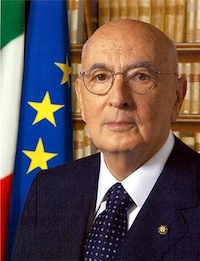 Dear Mr. President,
My name is Monica Aschei, the wife of Silvio Scaglia, founder of Fastweb, who has been detained in Rebibbia for 67 days for the role he has played at Fastweb in the years 2003-2007 in relation to an ongoing investigation into an alleged tax fraud and fake billing by Roman prosecutors.
My husband has always maintained his innocence. He denies all charges which have already been the object of a previous inquiry.
His attorneys confirm that there is no circumstantial evidence against him: there is no evidence and there are no witnesses on his alleged complicity with the illegal operations he has been charged with.
There is no evidence to justify preventive incarceration: my husband has already been interrogated by the prosecutors, he cannot tamper with 3-year-old evidence, he has certainly no intention of running abroad, given that he surrendered himself to the authorities and cannot repeat the crime (he has not played any operational role at Fastweb since 2007).
I do understand that prosecutors are doing their job but does this justify the prolonged times of preventive incarceration without a trial?
I think you can understand the pain my family and I are going through now and my sense of frustration and powerlessness for what I consider to be grave injustice.
My husband is not a criminal, a murderer and neither is he a “mafia man”.
He is a good citizen who has always behaved properly, has devoted his life to supporting and creating innovation, employing over 30,000 people and contributing to Italy’s growth in the field of international telecommunications.
I have heard too many versions of the facts over the last two months; a top- level web of intrigues, poisons and resentment from the past; anomalies of the Italian judiciary system. But I cannot find a good answer, a good reason for the steps that have been taken against him.
I get new hopes every day that are systematically overturned. I get told that this is the way our system is and that I should put up with it but I don’t want to and I cannot accept what is happening and no one should.
I am addressing this letter to You because You have wisely delivered an important message to the Italian judiciary, that is, the respect for the rights of every citizen; respect for true justice that judges without abusing its power, a kind of justice that is beyond prejudice because it knows how to listen.
I would like my husband to be judged by the same justice you support and long for, a kind of justice that pursue the truth and does not resort to preventive incarceration beyond a reasonable time.
We are getting a lot of support, even from people we have never met.
Driven by strong disillusionment and bitterness with the responsibility of giving some certainty to the many employees of the new business initiatives undertaken by my husband, I ask You to shed light on his case and on those of the many people that, like my husband, are unjustly held in prison.
I hope You can consider, as President of the Higher Council of Italian Judiciary, the sensitive issue of preventive incarceration, often arbitrarily implemented to the limit of human and constitutional rights.
I thank You in advance for the assessments you would like to make which will surely be of great comfort to us all in a moment of such unfair as much as undeserved pain.
Sincerely,
Monica Aschei Scaglia
Reply from the Italian President
The Italian President has repeatedly pointed out –even recently – how complex the role of judiciary is and the need for judges to consider the difficult and painful situations affecting a man, his dignity and freedom.
This is what Loris D’Ambrosio (the President’s advisor for the Administration of Justice) writes in reply to a letter by Mrs. Scaglia, the wife of Silvio Scaglia, who has been held in Rebibbia for 77 days.
After confirming that “The President cannot interfere with specific legal proceedings because their assessment is left exclusively with the judiciary” Loris D’Ambrosio adds “I am convinced that prosecutors will not fail to make a prompt and balanced decision on Your husband’s position, taking into account investigation requirements and defense strategies.
D’Ambrosio makes explicit reference to the numerous pre-trial instruments availble within the criminal code: instruments that, if requested, involve, in the case of people under preventive measures, broader assessments – in terms of evidence of guilt and preventive custody – by more than one judge and by the High Court of Cassation.

Floored, an episodic web series showing exclusively on Babelgum, will ring the NASDAQ Stock Market Opening Bell on May 13. It is a huge success for the innovative platform set up by Silvio Scaglia, a pioneer in the creation and distribution of content across the virtual work through optic fibre.
Nasdaq’s choice of promoting Floored is not accidental. James Allen Smith’s work is a collection of stories about the passage from the traditional system of trading of the Chicago Board of Trade to electronic exchange via computer.
A difficult transition that can have undesired and devastating side-effects, as demonstrated by the mistake made by a Citicorp broker last week during the transmission of an order: the trader, mistakenly, placed a sell order for 16 “billion” rather than “million” which caused the Dow to plunge. However, behind the electronic mistake, warns Floored, there is always a human event.
So the series, which has gained success among both the public and the critics, follows “with a pinch of bitterness” – writes New York Times – a generation of outcry traders who find themselves increasingly obsolete.”
Floored looks at examples from the past like Jeff Ansani, who took a colossal loss in one trade in 1994 and is now a mere clerk. A typical story for John Landis and Eddie Murphy, now showing on Babelgum.
Let’s hope that Silvio Scaglia will hear the bell ringing (on Cnbc).
‘Terrible and unintelligible’: Silvio.scaglia.it interviews Franco Debenedetti
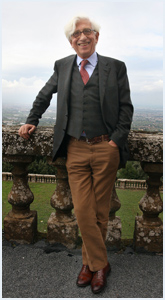
Senator Debenedetti, 73 days have passed since Scaglia’s arrest. How do you feel about this use of preventive incarceration?
“I feel that something terrible and unintelligible is happening. This generates fear”.
Franco Debenedetti, an experienced manager who has been elected to the Senate in the listings of the PDS and PD for three terms, was among the first to bring up the issue of Scaglia’s judicial treatment in “Il Sole 24 Ore” of 28 March.
“It is not clear why he is still in prison. There is no danger of him running away. He was in Brazil and came back to Italy spontaneously. He cannot repeat the crime: he has not played any operational role at Fastweb in years. He cannot tamper with evidence, given that after so many months evidence has already been gathered. He cannot influence witnesses whose statements have already been collected”.
Senator, most of these questions had already been raised in your intervention back in March. Did you get an answer?
“No I didn’t, I’m afraid. I understand that they don’t owe me an answer but is it good to leave the public in such bewilderment? My only explanation is that Scaglia is still in prison because “he would not show signs of repentance”. I can hardly believe that: do we live in a secular state governed by the law or have we gone back to the Spanish Inquisition when torture was used to get a confession?”
It’s something that goes beyond human solidarity for a presumed criminal, isn’t it?
“Yes. If Scaglia’s rights have been violated, our rights have been violated too. We are entitled to believe that the judiciary system protects us. When we don’t understand, when doubts rise, mistrust and fear come into place. I wonder if we realize how serious this is”.